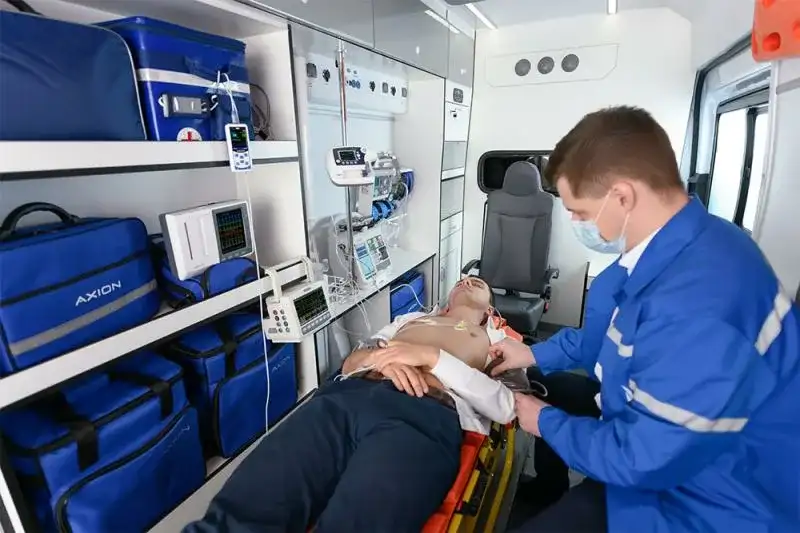
Higher education in Russia
Russian universities have centuries of tradition, and they have taught foreign students since the end of the 19th century. The range of fields is wide, and the education is built to be used in practice: companies take part in the programs.
That record is why Russia is one of the countries foreign students choose most often.
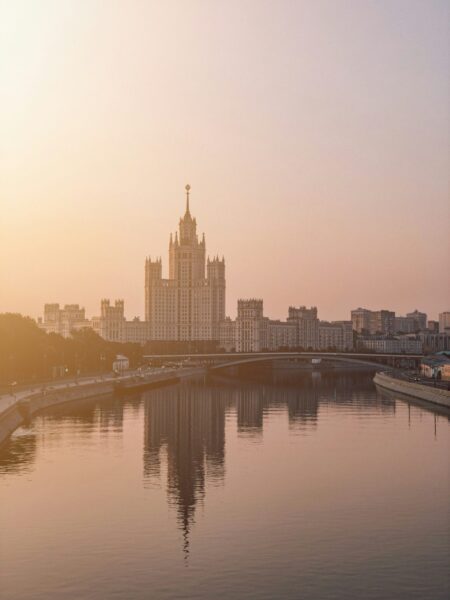
Over 300,000
Students from around the world at Russian universities each year, and the number keeps growing.
37,000+
Doctors of Sciences in the higher-education system. This degree sits above a PhD.
136,000+
Candidates of Sciences, the Russian degree treated as equivalent to a PhD.
A world leader in STEM
Russia is a recognized leader in training STEM specialists: mathematicians, physicists, chemists, geologists, engineers, programmers, doctors, and people in the other natural sciences.
That standing shows up in ARWU (Academic Ranking of World Universities), the QS World University Rankings, and THE (Times Higher Education).
48 Russian universities are in the QS World University Rankings 2023. These are some of them.
| University | QS 2023 |
|---|---|
| Lomonosov Moscow State University | 75 |
| Bauman Moscow State Technical University | 230 |
| Novosibirsk State University | 260 |
| Tomsk State University | 264 |
| Moscow Institute of Physics and Technology (MIPT) | 267 |
| Saint Petersburg State University | 270 |
| RUDN University | 295 |
| HSE University | 308 |
| National Research Nuclear University MEPhI | 308 |
| Kazan (Volga Region) Federal University | 322 |
| Ural Federal University (UrFU) | 335 |
| MGIMO University | 345 |
| ITMO University | 359 |
| Peter the Great St. Petersburg Polytechnic University | 382 |
| National Research Tomsk Polytechnic University | 398 |
| Far Eastern Federal University | 434 |
| National University of Science and Technology MISIS | 467 |
Western rankings lean on papers in Western journals, where Russian universities are less competitive than the largest Western ones. The teaching itself is stronger than those ranks suggest.
Subjects in the world top 200
In the QS 2022 subject rankings, Russian universities are among the 200 best in the world for:
- Physics and astronomy
- Mathematics
- Computer science
- Chemistry
- Oilfield business
- Biology
- Geography
- Economics
- Statistics
- Sociology
- History
- Philosophy
- Linguistics
Eastern Europe and Central Asia
The QS EECA University Rankings 2020/21 covers higher education in 29 countries of Central Asia and Eastern Europe.
| Russian universities in QS EECA 2020/21 | |
|---|---|
| Total | 117 |
| Public | 112 |
| Private | 5 |
The five private universities in that ranking:
- Russian New University
- St. Petersburg University of Management Technologies and Economics
- Russian School of Economics
- Moscow Financial and Industrial University “Synergy”
- Voronezh Institute of High Technologies
The European Social Survey of 2010 put Russia 8th in Europe for higher education among people aged 25 to 39. 39% of that age group had a higher education. On that measure Russia stood ahead of Germany, France, and the United Kingdom.
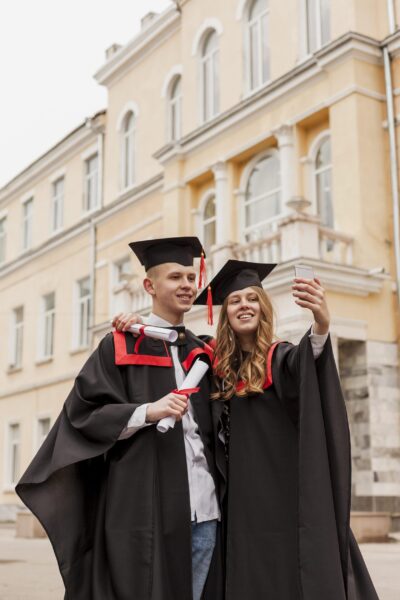
A wide range of programs
| Number | |
|---|---|
| Universities | 741 |
| National research universities | 29 |
| Federal universities | 10 |
| Universities with special status | 2 — Moscow State University and St. Petersburg State University |
| Specialties | More than 650 |
| Regions with a university | 82, from Kaliningrad to Vladivostok |
Those specialties run at bachelor’s, master’s, and specialist level, and in postgraduate study: residency, adjunct programs, and assistant internships.
World-class study at a lower price
Fees at Russian universities are far below those in the United States, Canada, and the United Kingdom. Prices also drop once you leave Moscow and St. Petersburg.
| Bachelor’s degree | Typical yearly fee |
|---|---|
| A typical program | Just over $1,000. The figure moves a little by subject. |
| The most prestigious universities in the main cities | Just over $8,000. Still far below major universities in the US or Europe. |
| Regional universities | Meaningfully lower than in the capital. |
Free places for foreigners
Russia is one of the few countries that lets foreigners study on a state-funded place.
15,000 places in 2020
Tuition-free spots the Russian government funded for international students that year.
Olympiads
Winners and prize-winners of university Olympiads receive benefits when they apply to leading universities.
Scholarships, grants, and everyday benefits
Scholarship programs are well developed. Whatever country a student comes from, and whatever subject they want, there is a scholarship that fits.
- Many universities offer scholarships and research grants, including extra funding for strong academic results.
- There is support for students in financial difficulty.
- Full-time students at universities with state accreditation get reduced fares on public transport (metro, bus, trolleybus, and tram) and 50% off commuter trains inside the same region. The benefit runs from 1 September to 15 June.
- Companies, museums, exhibitions, and other venues often give a student discount as well.
Double degrees
Russian diplomas are recognized widely, under agreements with more than 60 countries. Many universities run joint programs with foreign institutions, so a graduate can hold a diploma from Russia and from the partner country.
International students can also join exchange programs and spend one or two semesters studying or interning at a partner university abroad.
Learning Russian
About 260 million
People speak Russian.
About 10 million
People are learning it each year.
The language is an advantage in the job market, not only a way to get around. Many universities teach it to foreign students at no charge. There are also language courses, winter and summer schools, and one-year preparatory programs.
The grammar and the Cyrillic alphabet put people off. Once you have Russian, other Slavic languages are easier to reach. It is also how you follow daily life in the country and read Pushkin, Tolstoy, Dostoevsky, and the rest in the original.
Dormitories and the cost of living
Most universities house their students, so finding a place to live is not the first problem on arrival. A dormitory place is free or costs a token amount, far below typical European rents. Renovation and furnishings are competitive with European campuses.
- Rooms for one, two, or three people
- Family units

Day-to-day expenses are lower than in Europe or North America. The gap is widest for students whose money is in dollars or euros, because of the ruble exchange rate.
Nature, culture, and settling in
The largest country
About one-eighth of the Earth’s land, and 11 time zones, from snowy Siberia to the Black Sea subtropics.
30 UNESCO sites
Russian cultural places on the World Heritage List.
200+ nationalities
More than 100 languages and dialects. The constitution guarantees freedom of religion.
On a break, students can see the marble quarries of Karelia, Lake Baikal, or the volcanoes of Kamchatka. Cities are full of buildings, sculpture, and planned streets. The historic center of St. Petersburg, with its palaces and manor houses, is officially an open-air museum.
Culture runs from Pushkin, Tolstoy, Dostoevsky, and Chekhov to opera and ballet, and from folk song to Tchaikovsky and Rachmaninov. The Bolshoi Theatre, the Tretyakov Gallery, the Pushkin Museum, the Hermitage, and St. Isaac’s Cathedral draw millions of visitors a year, and they are only a short list.
Food is part of the same introduction: pancakes, homemade dumplings, buckwheat, jelly, and Russian salad in the Soviet recipe.
Russia sits between Asia and Europe, and it has absorbed traditions from the peoples on its borders. Christianity, Islam, and Buddhism live side by side in the cities. In St. Petersburg alone there are churches, cathedrals, mosques, synagogues, datsans, and prayer houses of 42 denominations.
That mix is why students from very different countries can find something familiar and settle into student life.
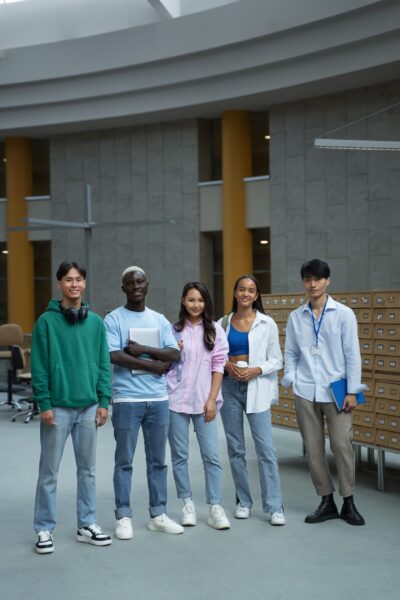
Student life
University life is not only classes. Every university has performing arts, sports teams, and volunteer groups. Youth festivals run through the year in different cities, and students can watch or take part.
- Days of National Cultures. A chance to present the traditions of your own country.
- KVN, the Club of the Funny and Resourceful. Teams compete in improvisation, prepared sketches, and jokes. The best university teams meet at the All-Russian Games, which are shown on national television.
- Sport. Gyms, pools, and outdoor grounds on campus are free for students. Sections organize trips and hikes. International students can join teams, including football and fencing, and compete at home and abroad.
How Russian schools perform
The same system shows up long before university. These results are for school pupils, not for university graduates.
| Study | Year | Result |
|---|---|---|
| Pearson ranking by the Economist Intelligence Unit, using PISA, TIMSS, and PIRLS | 2014 | 8th in Europe, 13th in the world |
| PIRLS, reading and comprehension in primary school | 2016 | 1st in the world |
| TIMSS, grade 8 mathematics | 2015 | 6th. Russia was in the top 10 overall. |
| TIMSS, grade 8 natural sciences | 2015 | 7th |
In team contests, Russian schoolchildren stay among the five strongest national teams in the world. In 2023 they won 31 medals at six Olympiads: 22 gold, 8 silver, and 1 bronze.
| Subject | Olympiad | Medals |
|---|---|---|
| Biology | International Olympiad, Al Ain (UAE) | 4 — 3 gold, 1 silver |
| Chemistry | 55th International Olympiad, Zurich | 3 gold, 1 silver |
| Physics | 53rd International Olympiad, Tokyo | 5 gold |
| Mathematics | 64th International Olympiad, Japan | 5 gold, 1 silver |
| Geography | 8th European Olympiad, Belgrade | 8 — 2 gold, 5 silver, 1 bronze |
| Computer science | 35th International Olympiad, Hungary | 4 gold |
Studying in Russia means a strong education, especially in STEM, at a fraction of Western fees. You join more than 300,000 international students, with scholarships and double degrees available, in universities that have been teaching foreigners for more than a century.